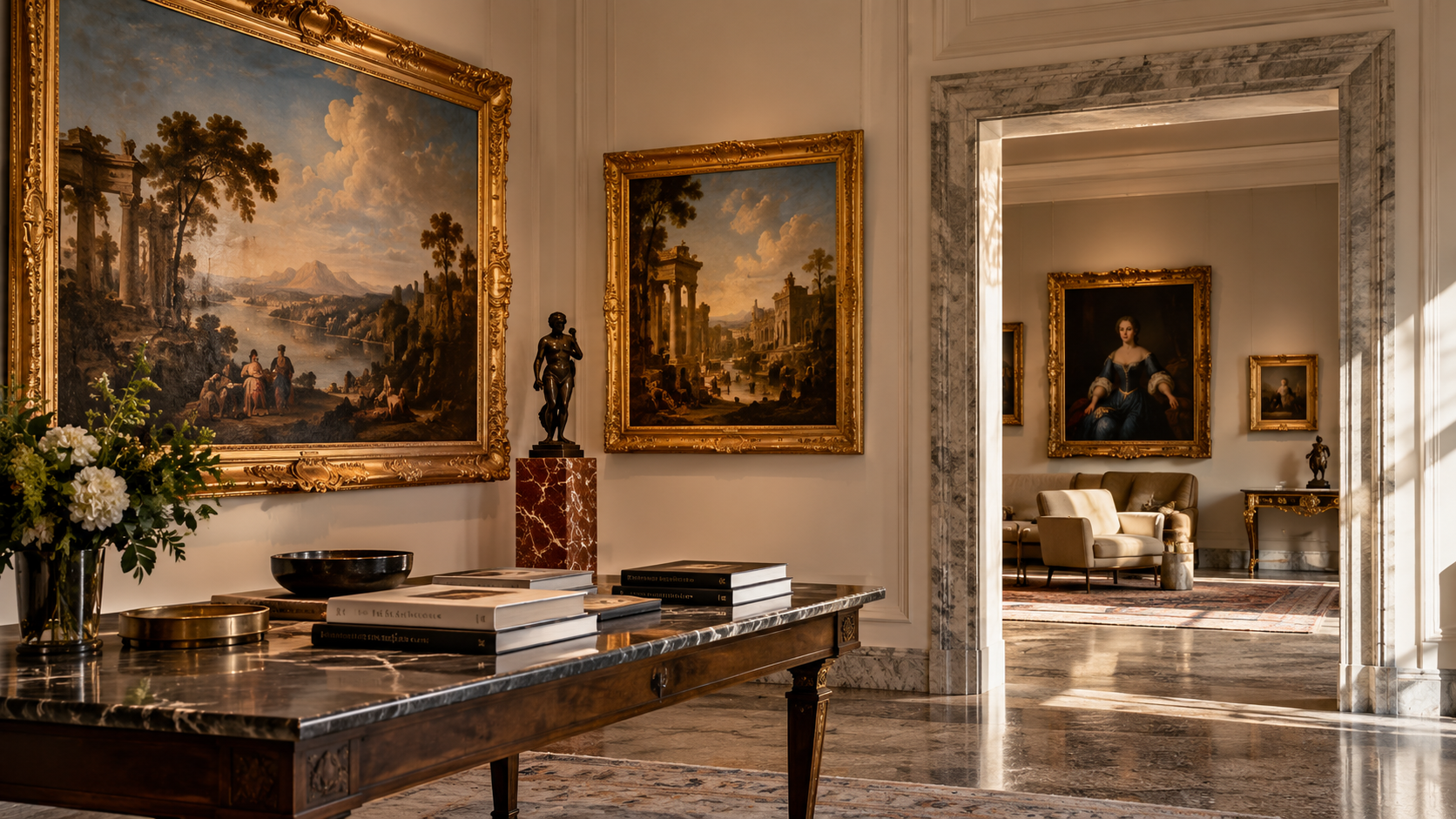
Private Art Advisory vs Art Dealers: understanding the differences between independent advice, gallery representation and the art market.
Collecting art is rarely a matter of choosing an object alone. Behind every acquisition are questions of attribution, provenance, condition, market context and personal significance. For private collectors, understanding who provides advice—and whose interests that professional represents—can be as important as understanding the work itself.
When comparing private art advisory vs art dealers, it is important to recognize that art advisors, dealers and galleries each play a distinct role in the art world. Their activities may overlap, but their responsibilities, commercial relationships and approaches to a transaction are not necessarily the same.
For collectors building a collection, considering an important acquisition or reviewing works already in their possession, these distinctions deserve careful attention.
Private Art Advisory vs Art Dealers: What Is a Private Art Advisor?
A private art advisor works with collectors to help them make informed decisions about acquiring, managing or developing an art collection.
The nature of the relationship depends on the collector’s circumstances. Some engagements concern a particular work. Others involve the long-term development of a collection, research into provenance, coordination with specialists or planning for its preservation.
An advisor may assist with:
- Understanding the collector’s interests and objectives.
- Researching artists, objects and their historical context.
- Reviewing provenance, attribution and condition documentation.
- Identifying relevant specialists and independent expertise.
- Evaluating acquisitions in the context of a broader collection.
- Coordinating practical matters involving conservation, insurance or collection stewardship.
An advisor’s independence should not be assumed from the title alone. It is important to understand how the professional is compensated, whether they represent other parties and whether they receive commissions or referral payments connected to a transaction.
The value of private advisory lies not simply in access to works, but in the quality of the research, judgment and professional relationships brought to the collector’s decisions.
What Does an Art Dealer Do?
An art dealer operates within the commercial market for works of art.
Dealers may acquire works for resale, represent sellers, facilitate transactions or act as intermediaries between buyers and owners. Many possess considerable expertise in particular artists, periods or collecting categories.
Their knowledge can be especially valuable when assessing market availability, historical sales and the commercial context of a work.
However, the dealer’s position within a transaction matters.
A dealer selling a work from their own inventory has a commercial interest in that sale. An intermediary may be acting for the seller, the buyer or another participant. These arrangements are not inherently problematic, but collectors should understand them before proceeding.
Clear disclosure of ownership, representation, commissions and other financial interests helps establish the basis for an informed transaction.
How Are Art Galleries Different?
Art galleries occupy an important position in the cultural and commercial life of the art world.
Many galleries represent living artists, organize exhibitions, support artistic careers and introduce new work to collectors and institutions. Others specialize in historical art, established artists or the secondary market.
A gallery’s relationship with an artist may extend over many years and involve exhibitions, publications, institutional placements and long-term career development.
For a collector, a gallery can provide valuable insight into an artist’s practice and the history of a particular work.
At the same time, a gallery representing an artist or offering works for sale has commercial responsibilities and interests that differ from those of an advisor engaged specifically by a collector.
The distinction is not one of quality or trustworthiness. It is a question of professional role and the nature of the relationship.
Independence, Fees and Conflicts of Interest
One of the most important questions a collector can ask is how a professional is compensated.
Private advisory arrangements may involve a fixed fee, a retainer, an hourly rate, a percentage of an acquisition or another agreed structure. Dealers and galleries may earn income through sales margins or commissions.
Different arrangements can be appropriate for different engagements. What matters is that the collector understands the terms.
Before appointing an advisor or proceeding with a transaction, useful questions include:
- Who is the professional representing?
- How will they be compensated?
- Are there commissions or referral arrangements with third parties?
- Does the professional own or have a financial interest in the work?
- What research and verification will be undertaken?
- Which responsibilities fall outside the engagement?
A transparent professional relationship should make these questions easier to answer, not more difficult.
Independence is best understood through the actual terms of representation and the disclosure of relevant interests, rather than through a description alone.
Why Provenance and Condition Matter
The visual appeal of a work is only one aspect of an acquisition.
Its history of ownership, attribution, physical condition and accompanying documentation may substantially affect the questions a collector needs to consider.
Provenance research can help establish where a work has been, how it has changed hands and whether gaps in its history require further investigation. Public collection resources, such as The Metropolitan Museum of Art collection, can also support wider art-historical research.
Condition assessments may reveal previous restoration, structural concerns or conservation needs. Attribution and authenticity can require examination by specialists with relevant expertise.
These inquiries are not limited to paintings or sculpture.
Fine musical instruments, historical objects and other exceptional cultural assets raise similar questions about makers, materials, condition, ownership and preservation.
A responsible advisory process recognizes that not every question can be resolved immediately. Where evidence is incomplete, uncertainty should be explained rather than overlooked.
When Should a Private Collector Consider an Art Advisor?
There is no single stage at which every collector needs professional advisory support.
A collector acquiring a first important work may benefit from guidance on documentation, pricing and the acquisition process.
An established collector may need assistance evaluating a significant addition, researching an unfamiliar category or reviewing the overall direction of a collection.
Families and institutions may also seek advice when considering conservation, succession, loans, cultural partnerships or the future stewardship of important objects.
In each case, the purpose of advisory should be to improve the quality of the decision.
Good advice does not remove the collector’s personal judgment. It provides a clearer foundation on which that judgment can be exercised.
Beyond Acquisition: The Long-Term Life of a Collection
A collection continues to develop long after an individual purchase has been completed.
Works require documentation, care and, in some cases, specialist conservation. Their significance may change as new research emerges or as the collector’s circumstances evolve.
For some collectors, the central question is how to acquire. For others, it is how to preserve, share or eventually transfer what they already own.
A long-term perspective recognizes that collecting is both a personal activity and a form of cultural stewardship.
The relationship between an object, its history and the people responsible for it is often as important as its place in the market.
The Doppiecorde Perspective
At Doppiecorde, our approach to private cultural and art advisory grew from an earlier involvement with fine string instruments and musical patronage.
The project began with a belief that exceptional instruments should not exist only as objects of ownership, but should remain connected to the musicians and cultural traditions that give them meaning.
Over time, this perspective expanded to include works of art, private collections and other objects of cultural importance.
Today, Doppiecorde works with private clients, collectors and institutions, considering each engagement in relation to its particular circumstances.
Our starting point is to understand the client’s intentions, the history of the object or collection and the professional expertise that may be required.
We believe that careful research, transparent relationships and respect for cultural heritage provide a sound basis for meaningful decisions.
Discover more about our Private Cultural & Art Advisory and Our Purpose.
Frequently Asked Questions
What is the difference between an art advisor and an art dealer?
An art advisor generally provides guidance to a collector, while an art dealer participates in the commercial buying and selling of artworks. Their activities can overlap, so collectors should clarify representation, compensation and potential conflicts of interest.
Is an independent art advisor always better than a gallery?
Not necessarily. Galleries and advisors offer different forms of expertise. The appropriate choice depends on the collector’s objectives, the work under consideration and the professional relationship required.
Do art advisors receive commissions?
Some advisors work on a fee or retainer basis, while others may receive transaction-based compensation. Collectors should request a clear explanation of all fees, commissions and relevant financial relationships.
Can an art advisor help with an existing collection?
Yes. Advisory work may involve collection research, documentation, conservation coordination, acquisition planning and long-term stewardship, depending on the agreed scope of services.
Why is provenance important when buying art?
Provenance helps establish the history of ownership and movement of an artwork. It may inform questions about authenticity, legal title, cultural heritage and other risks relevant to an acquisition.
How should I choose a trusted art advisor?
Look for relevant expertise, transparent compensation, clear professional responsibilities and an approach that recognizes the importance of independent verification. A trusted advisor should be willing to explain what is known, what remains uncertain and when specialist opinions are necessary.
Doppiecorde — Culture · Relationships · Exceptional Assets
Private Cultural & Art Advisory | Palm Beach · London · Florence