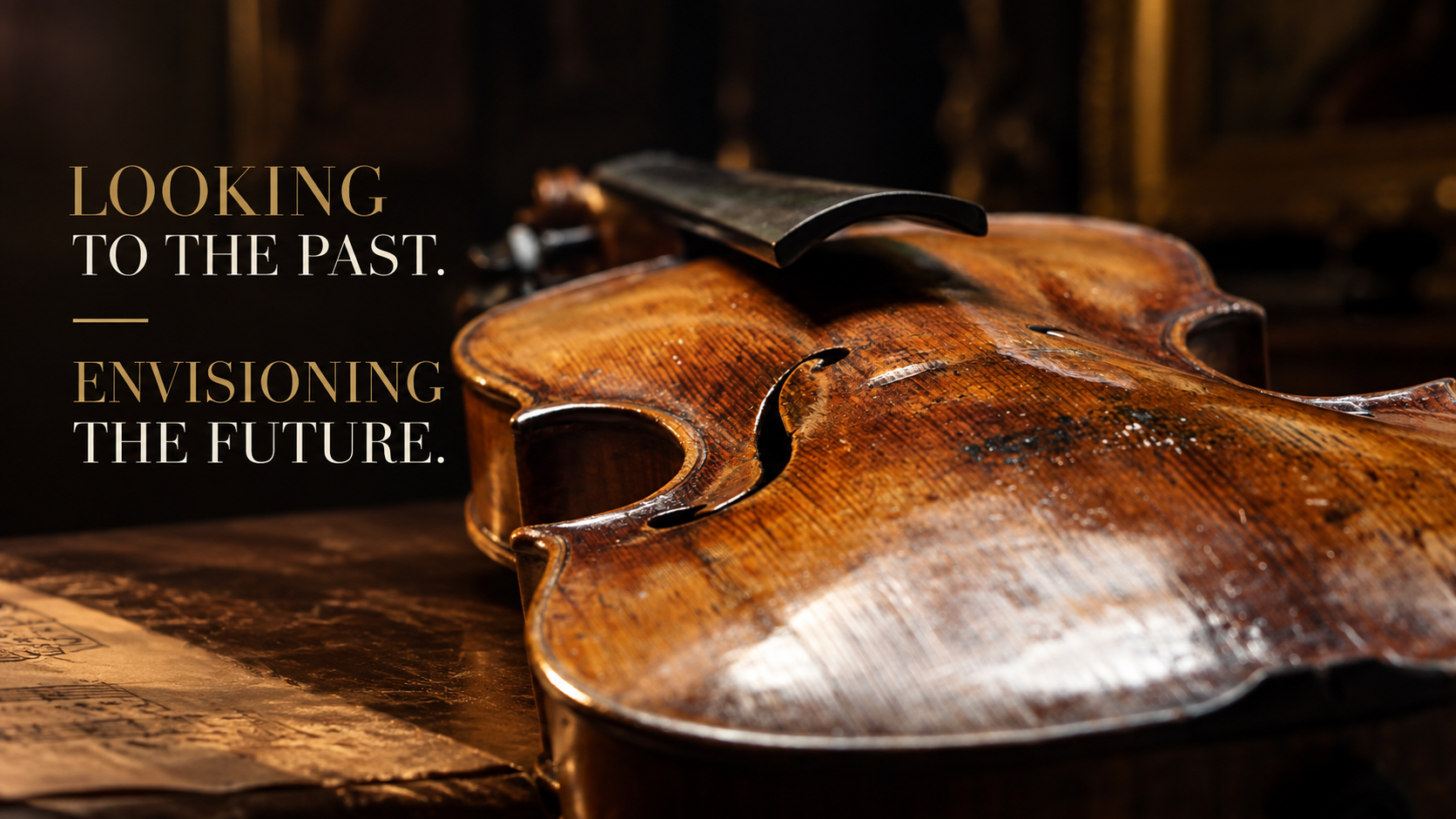
Collecting Rare Italian Violins
Provenance, Authenticity and Long-Term Value
A violin can survive for three centuries. But what makes one instrument historically important, another highly desirable, and a third difficult to attribute?
The answer rarely lies in a single certificate, an illustrious name or an auction result. Collecting rare Italian violins requires an understanding of craftsmanship, evidence, preservation and the remarkable lives these instruments continue to lead.
A violin is not simply an object from the past. It may still be played, studied, restored and entrusted to another generation. Its value is inseparable from that continuing history.
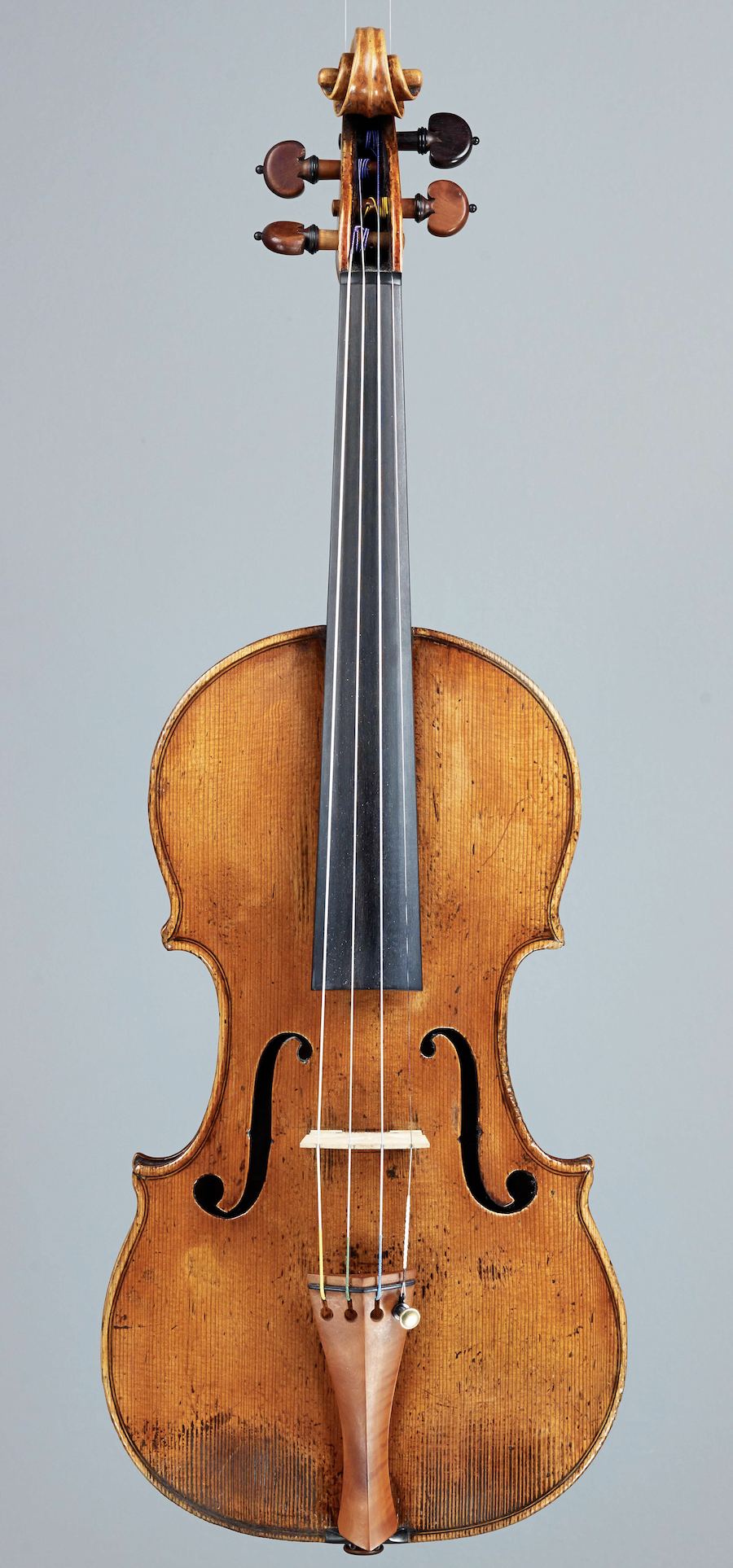
Rare Italian Violins: Beyond Cremona
Cremona remains central to the history of violin making. The Amati family, Antonio Stradivari and Giuseppe Guarneri del Gesù established traditions whose influence extends far beyond their own time.
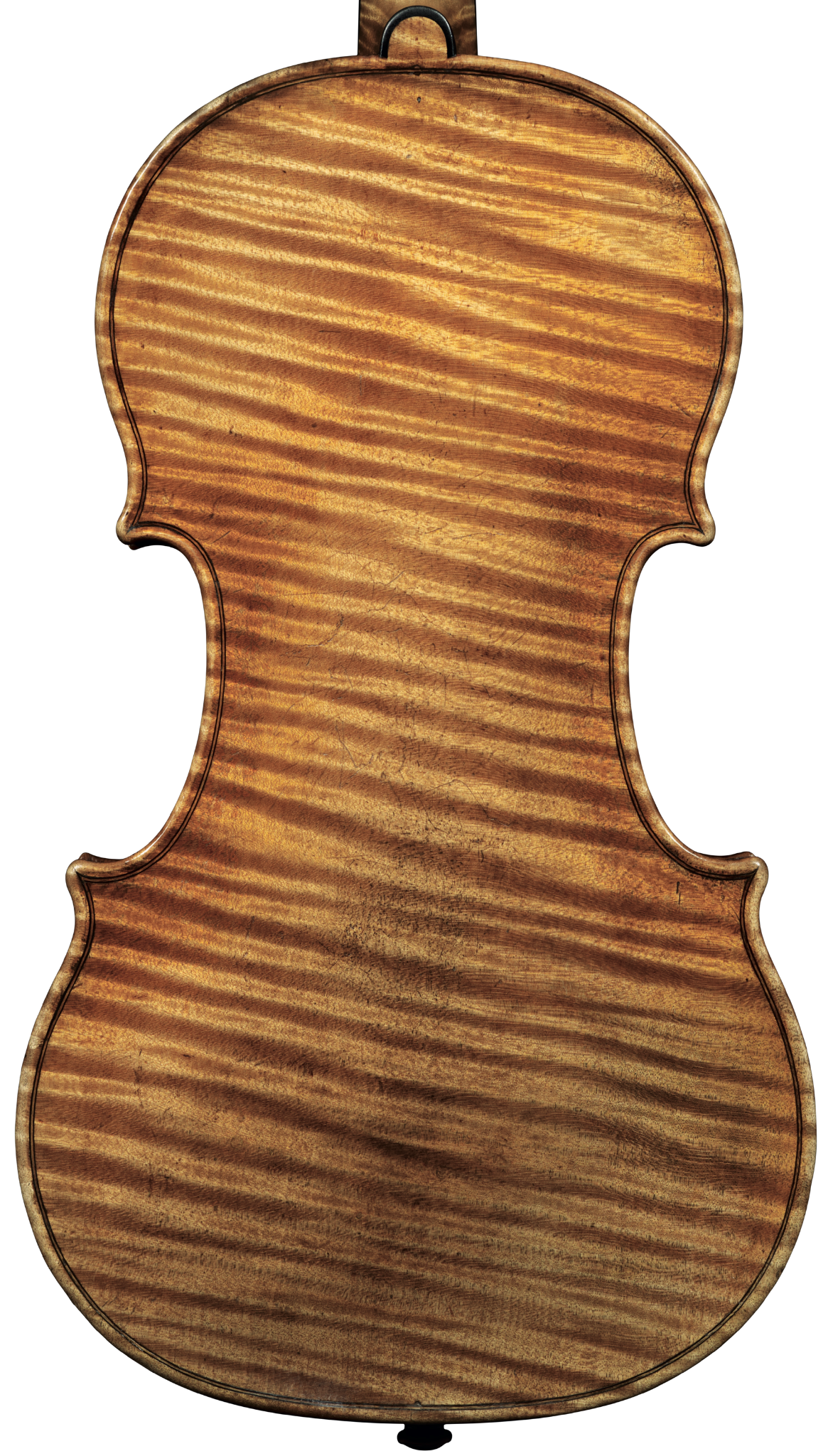
Yet Italy’s violin-making heritage is not confined to one city. Turin, Venice, Genoa, Milan, Naples and other centres developed distinctive approaches to construction and craftsmanship.
Amati, Stradivari, Guarneri
A defining centre of classical violin making, with instruments that remain central to historical scholarship and performance.
Guadagnini and the Piedmontese Tradition
Giovanni Battista Guadagnini’s Turin period forms an important chapter in the history of eighteenth-century Italian violin making.
Montagnana, Goffriller & Pietro Guarneri
Domenico Montagnana, Matteo Goffriller and Pietro Guarneri of Venice represent three distinguished figures of the Venetian school, celebrated for their contributions to Italian violin making and the art of the cello.
For those collecting rare Italian violins, understanding the differences between regional schools is an essential part of evaluating authenticity, craftsmanship and historical significance.
These differences help place an instrument within a particular artistic environment, workshop tradition and historical period. Each violin deserves individual research rather than assumptions based solely on the reputation of its maker.
Every Instrument Has a History. Not Every History Is Documented.
An important violin may have passed through private collections, professional musicians, dealers and institutions. Some of these relationships leave extensive records; others survive only through fragments.
Letters, photographs, invoices, certificates, catalogues and archival references may help reconstruct the instrument’s journey. The difficulty lies in establishing which documents genuinely relate to the instrument being examined.
Provenance Is Not the Same as Legal Title
A convincing ownership history can support confidence in an instrument, but it does not automatically establish that the current seller has the legal authority to transfer ownership. Both questions require attention.
Missing information does not necessarily make an instrument unimportant. It does, however, require intellectual honesty. A responsible collector should distinguish documented facts from historical assumptions.
Authenticity and Attribution of Rare Italian Violins
Attribution is one of the most consequential aspects of acquiring a rare Italian violin. Specialists examine construction, outline, arching, varnish, wood, tool marks and other characteristics in relation to known examples.
A label inside the instrument cannot establish authorship by itself. Labels may be replaced, copied or added long after an instrument was constructed.
The Expert’s Eye
Specialist examination considers the relationship between the instrument’s physical characteristics, historical documentation and accepted examples of a maker’s work.
The Scientific Evidence
Dendrochronology and technical imaging may contribute useful evidence about materials and construction, but neither can independently identify the maker.
The wording of an attribution matters. Descriptions such as by, attributed to, workshop of and school of may express different levels of confidence.
Certificates can be important evidence, but their significance depends on the authority of the expert, the date of examination and the precise conclusions recorded.
The Beauty and Complexity of Condition
Centuries of musical use leave traces. Some instruments have undergone extensive restoration; others retain significant original material. The quality and history of these interventions can influence both cultural significance and market desirability.
A condition assessment should consider structural stability, cracks, repairs, varnish, alterations and the preservation of original components.
Preserving a historical violin is not simply about keeping it unchanged. It is about understanding what should be protected, what may require intervention, and why those decisions matter.
The judgment of a qualified restorer is essential. Conservation decisions must balance the instrument’s historical integrity with its physical stability and, where appropriate, continued use.
Understanding the Long-Term Value of Rare Italian Violins
Auction records provide useful information about market activity. They can also create the misleading impression that two instruments bearing the same maker’s name should have comparable values.
In practice, attribution, preservation, provenance, musical characteristics and the circumstances of a particular sale can produce substantial differences.
Attribution
Confidence in authorship and the quality of supporting documentation.
Condition
Original material, structural integrity and the quality of previous restoration.
Liquidity
The time and specialist access that may be needed to find a suitable buyer.
The market for rare Italian violins is highly specialised. Individual instruments differ in provenance, attribution, preservation and musical qualities, making direct price comparisons particularly challenging.
These instruments should not be approached as conventional liquid investments. Prices may fluctuate, ownership carries costs, and future appreciation is never guaranteed.
Long-term collecting decisions are better informed by the instrument’s individual qualities and the collector’s broader objectives than by a headline price.
When a Collection Becomes Part of Musical Life
A historical violin may be preserved within a private collection while remaining in active musical use. Carefully structured loans can connect collectors with performers and allow audiences to experience instruments that might otherwise remain silent.
This relationship between patrons and musicians was central to the original idea behind Doppiecorde, conceived in 2012 and developed in Bormio, Italy, in 2013.
The project explored how cultural patronage could support talented musicians through access to fine string instruments.
Such relationships require appropriate agreements covering insurance, conservation, transportation, maintenance and permitted use. Musical opportunity and responsible stewardship must remain inseparable.
Discover more about Doppiecorde’s approach to cultural patronage .
Eight Questions Before an Acquisition
Every important instrument deserves an individual assessment. These questions provide a practical starting point.
- 01 — Who made it? Is the attribution supported by appropriate independent expertise?
- 02 — Where has it been? What can be established from historical ownership records?
- 03 — What is its condition? Has a qualified specialist examined structural integrity and restoration?
- 04 — Are the documents consistent? Do certificates, photographs and records refer to the same instrument?
- 05 — Is the title clear? Can the seller establish the legal right to transfer ownership?
- 06 — What supports the valuation? Are comparisons relevant to this particular instrument?
- 07 — What are the transaction terms? Have warranties, insurance, taxes and delivery been reviewed?
- 08 — What happens after purchase? Is there a plan for preservation, documentation and musical use?
Collecting as Cultural Stewardship
Rare Italian violins have survived because generations of musicians, collectors and specialists considered them worth preserving.
Their significance cannot be captured entirely by a certificate, an attribution or a valuation.
For Doppiecorde, private advisory in the field of fine musical instruments begins with research, independent judgment and respect for the cultural history of each object.
Collecting rare Italian violins is ultimately a commitment to preserving exceptional craftsmanship and the cultural history of music for future generations.
A violin may have substantial financial value. Its enduring importance also lies in the craftsmanship it preserves, the musicians who have shaped its history and the music it may still make.
International Council of Museums — Code of Ethics
Journal of Archaeological Science — Dendrochronology of Historical Violins