Doppiecorde Journal · Culture & Collecting
After travelling through the world’s great centres of art, we discover that its most profound meaning may still be found in the simplest human experience: standing together before something beautiful.
Art Collecting in Palm Beach invites us to rediscover something that the great international art capitals can sometimes obscure: the intimate, romantic, and profoundly human experience of art. We have travelled the world. We have walked through the great cities where art, culture, wealth, and ambition have shaped extraordinary histories. We have witnessed how art has become an increasingly sophisticated part of the international financial landscape, acquiring meanings that extend far beyond the walls of museums and private collections.
In London, New York, Paris, Geneva, and other great international centres, art moves through an intricate world of institutions, galleries, auction houses, private transactions, and financial relationships. Paintings become investments. Collections become components of family wealth. Exceptional works may be considered in the context of estate planning, philanthropy, taxation, and the preservation of capital across generations.
We have also seen art become part of the pursuit of luxury: a language of distinction, a reflection of personal success, and sometimes an expression of social identity.
There is nothing inherently wrong with these dimensions. Art has always existed within economic and social structures. Patronage, ownership, commerce, and the desire to possess beautiful objects have contributed to the history of culture for centuries.
Yet the more sophisticated the international art market becomes, the more important it is to remember something remarkably simple.
A work of art is not only what it is worth.
After the Great Cities, the Discovery of a Smaller World
There is a particular feeling that comes from arriving in a place whose scale seems almost modest compared with the great capitals of the world, yet whose cultural and human significance is far greater than its geography might suggest.
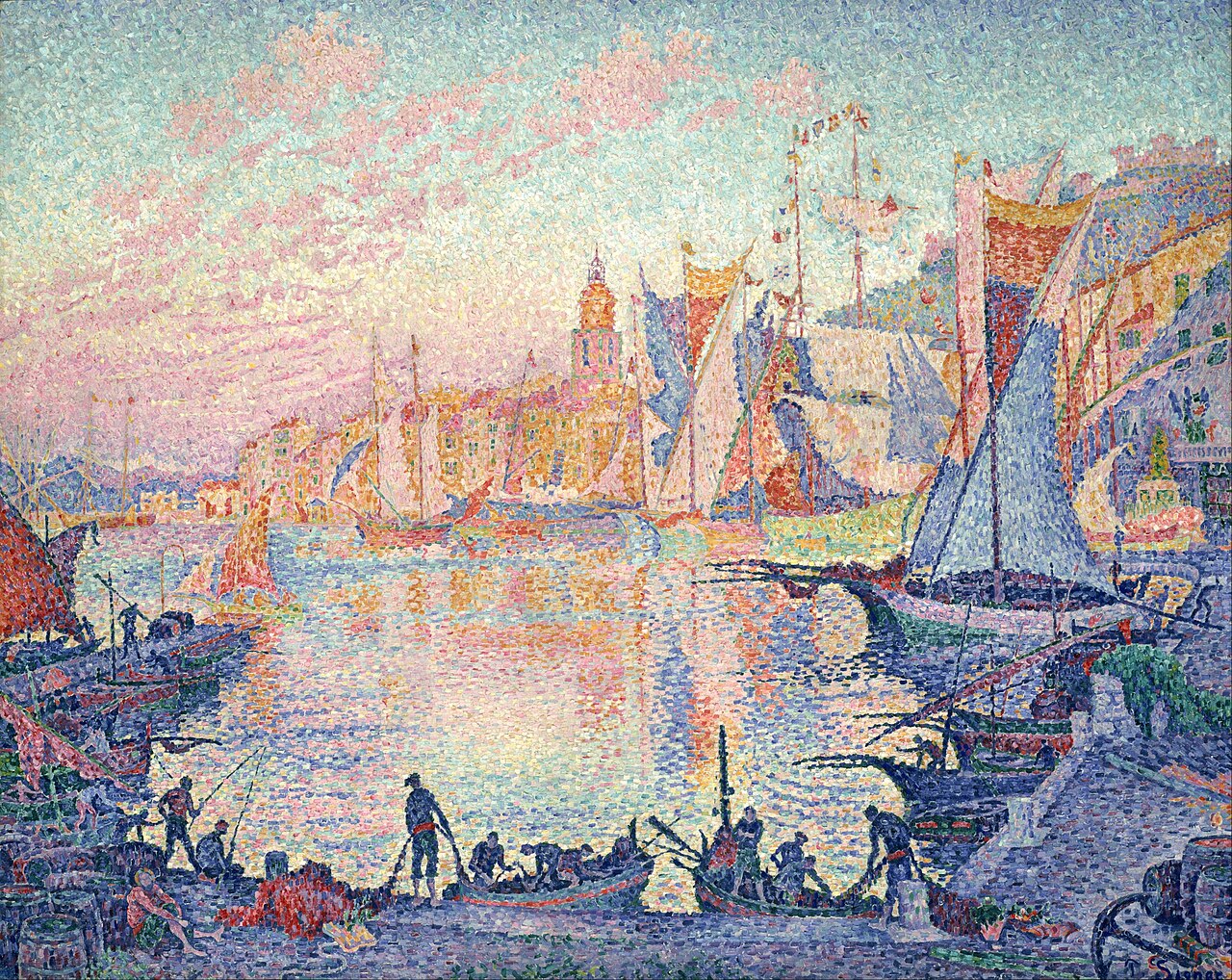
Saint-Tropez, on the French Mediterranean coast, has long embodied this contradiction.
What appears to be a small village has attracted artists, writers, collectors, entrepreneurs, and extraordinary personalities from across the world. Its appeal cannot be explained simply through wealth or exclusivity.
There is also the intimacy of its streets, the familiarity of its encounters, and the remarkable possibility that people accustomed to the formality of great international cities might rediscover a more natural way of being together.
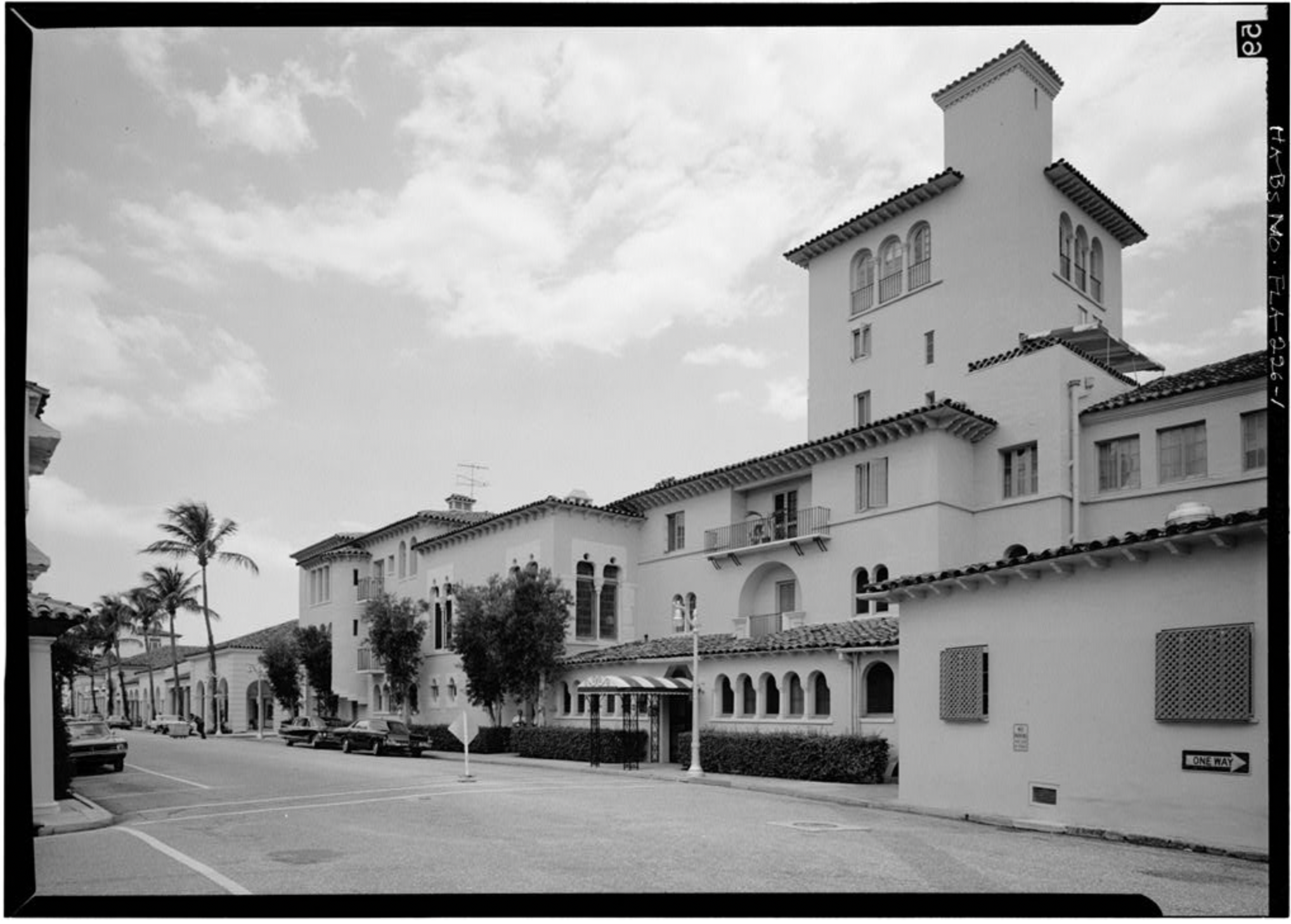
Across the Atlantic, Palm Beach evokes something of that same spirit.
The architecture, landscape, history, and traditions are different. But the experience of arriving in a relatively small community that brings together people of remarkable international experience feels unexpectedly familiar.
Here, the extraordinary can coexist with the ordinary. The scale of the place encourages encounters rather than spectacle. Conversations can become more personal. Relationships can develop beyond the formal settings in which business and social life so often unfold.
And it is within this atmosphere that we begin to rediscover another dimension of art.
The Romance of Art
The word romance may seem unusual in a world increasingly accustomed to speaking about art through valuations, investment performance, and market intelligence.
Art Collecting in Palm Beach offers a different perspective: an opportunity to appreciate beauty beyond financial performance, through personal encounters, shared emotions, and the quiet pleasure of discovering an exceptional work.
But perhaps it is precisely the word we need.
We do not mean romance as nostalgia or as an idealised rejection of modern life. We mean the enduring human capacity to be moved by something that cannot be entirely explained, quantified, or possessed.
The ability to stop.
To look at a painting without immediately asking what it might achieve at auction. To encounter a sculpture without considering its position within a financial portfolio. To listen to a historical musical instrument and hear, beyond its rarity and value, the human imagination that brought it into being.
There is a form of freedom in these moments. They ask nothing of us beyond our attention.
A painting may have an extraordinary provenance, a significant market value, and an important place in art history. These things matter, and understanding them is essential to responsible collecting.
But none of them can fully describe what happens when a person stands before that painting and feels something unexpected.
An emotion may arise from a colour, a gesture, a face, a memory, or something that remains impossible to articulate.
This is the romantic dimension of art: its ability to reach us beyond the structures through which we ordinarily understand value.
To Look, to Dream, to Feel — Together
Perhaps the most beautiful experience of art is not always a solitary one.
Imagine a few people gathered around a painting in a private home. They may come from different countries, generations, professions, and traditions. Their lives may have followed entirely different paths.
Yet for a moment, they are looking at the same thing.
Someone notices a detail. Another remembers a place. Someone else sees a story in the expression of a figure, or discovers an emotion they had not expected.
The conversation may begin with art history, but it soon becomes something more human. It becomes a conversation about memory, imagination, beauty, and life.
No one needs to explain the painting’s financial significance. No one needs to demonstrate expertise. The experience belongs equally to those who know its history and those who are encountering it for the first time.
For that brief moment, the artwork creates a shared world.
And perhaps this is one of the most extraordinary things art can do.
To look.
To dream.
To feel.
Together.
Art Collecting in Palm Beach: Rediscovering the Human Scale
Palm Beach does not exist outside the realities of wealth, finance, or the international art market.
Quite the opposite. Its residents and visitors may be deeply connected to the world’s leading financial centres, cultural institutions, and collecting communities.
But the intimacy of the place offers a different perspective.
A relatively small community can create space for relationships that feel less institutional and more personal. Cultural conversations need not always take place beneath the grand ceilings of museums or across the tables of international auction houses.
They can happen in a garden, a living room, a gallery, or during an unplanned encounter.
This does not make the art less important. It makes the experience more immediate.
The significance of a work can emerge naturally through the people who live with it, care for it, and share it with others.
In this sense, Palm Beach reminds us of something that great cities can sometimes make difficult to perceive: culture does not require monumentality in order to be meaningful.
The cultural life of Palm Beach also finds expression through institutions such as The Society of the Four Arts , reflecting the enduring relationship between this community, artistic appreciation, and cultural exchange.
A small place can hold an immense world.
The Difference Between Price and Meaning
The financial value of an artwork can be studied, compared, negotiated, and documented. Market research, provenance, condition, authenticity, and legal considerations are essential parts of informed collecting.
These disciplines protect collectors and help preserve the integrity of the objects entrusted to them.
But financial value and personal meaning are not the same thing.
An artwork may be expensive without becoming personally significant. Another may occupy a modest position within the market yet become the emotional centre of a family’s home.
Some works are remembered because of their historical importance. Others because of the moment in which they entered someone’s life.
The most meaningful collections often contain both kinds of history: the history of the objects themselves and the history of the people who have lived with them.
This is why collecting cannot be reduced to acquisition.
It is also an act of attention, responsibility, curiosity, and sometimes love.
From Ownership to Stewardship
Over time, the relationship between a collector and a work of art inevitably changes.
What begins as a discovery may become part of a home, a family, or a personal history.
A painting witnesses generations. A sculpture becomes familiar to children who grow up around it. A rare violin may carry the memory of musicians, makers, and custodians whose lives are separated by centuries.
These objects are owned for a period of time, but their histories are rarely confined to a single owner.
This introduces an idea that we consider central to collecting: stewardship.
To collect responsibly is not merely to possess something exceptional. It is to understand its past, protect its present, and consider its future.
This responsibility extends beyond financial preservation. It includes the care of cultural memory and the possibility of passing beauty and knowledge to another generation.
In a place where private life, family traditions, and international experience meet, this understanding feels especially relevant.
Art as a Reason to Pause
Modern life encourages movement. We travel, negotiate, invest, communicate, and make decisions with increasing speed.
The international art market is no exception.
Yet art itself asks something different of us.
It asks us to remain.
To spend time with a painting whose meaning may not reveal itself immediately. To return to an image and discover that our understanding has changed. To listen again, look again, and recognise something that escaped us before.
Perhaps this is why the apparent simplicity of places such as Saint-Tropez and Palm Beach can feel so meaningful after the intensity of the world’s great cities.
They remind us that a rich cultural life does not always need to be hurried, monumental, or publicly displayed.
Sometimes it begins when someone invites another person to stop and look.
The Doppiecorde Perspective
At Doppiecorde, our experience across art, rare musical instruments, and exceptional cultural assets has reinforced a simple conviction: professional knowledge and human sensitivity should never be separated.
We believe in the importance of research, provenance, authenticity, independent judgement, and the careful consideration of every acquisition.
We also believe that these responsibilities exist to serve something greater than a transaction.
They allow collectors to build meaningful relationships with the works they choose to preserve.
Palm Beach offers us a particularly compelling setting in which to reflect upon this idea.
After travelling through the world’s great cities, witnessing the extraordinary sophistication of the international art market, we find ourselves drawn to something much simpler.
The possibility of gathering around a painting.
Of looking without urgency. Of sharing a thought, a memory, or an unexpected emotion. Of allowing beauty to become a reason for human connection.
Perhaps the most lasting significance of art has never depended upon the scale of the market surrounding it.
Perhaps it has always lived in moments such as these.
Moments in which we remember that, before art became an asset, a symbol, or an investment, it was an invitation to see the world differently.
And to share that vision with someone else.
Our approach to private art advisory is rooted in the belief that knowledge, discretion, and cultural sensitivity should accompany every meaningful collecting journey.