An exceptional object carries more than the history of its creation. It carries the traces of those who owned it, studied it, preserved it and passed it from one generation to another.
The history behind the object
In the world of fine art and rare musical instruments, provenance is not merely a list of previous owners. It is a historical inquiry into the life of an object.
A painting may have passed through private collections, exhibitions, inheritances and sales before entering a museum or another collection. A violin may have travelled between musicians, dealers and families, acquiring certificates, photographs and written descriptions along the way.
Each passage can leave evidence. Sometimes that evidence is extensive. Sometimes it consists of a single letter, a catalogue entry, a label or an archival photograph.
Serious art provenance research begins by examining these traces, establishing how they relate to one another and distinguishing documented facts from assumptions that have accumulated over time.
A continuous history is valuable, but historical records are rarely complete. A gap does not necessarily invalidate an object’s history. It does, however, create a question that deserves careful investigation.
Provenance is not authenticity
Provenance and authenticity are closely connected, but they do not answer the same question.
Provenance concerns the documented history of an object. Authenticity concerns its identity: who made it, when it was created and whether it corresponds to the description under which it is presented.
Attribution introduces another important distinction. A painting described as being by a particular artist is not necessarily equivalent to one attributed to that artist, associated with a workshop or assigned to a broader school.
Comparable distinctions exist in the study of historical musical instruments.
A documented chain of ownership can contribute to an attribution, but it does not independently establish authorship. Likewise, an accepted attribution does not automatically resolve questions of lawful title or historical transfer.
Responsible evaluation considers these matters together while recognizing that each requires its own evidence and expertise.
What historical records can tell us
The smallest documentary detail can sometimes change the understanding of an object’s history.
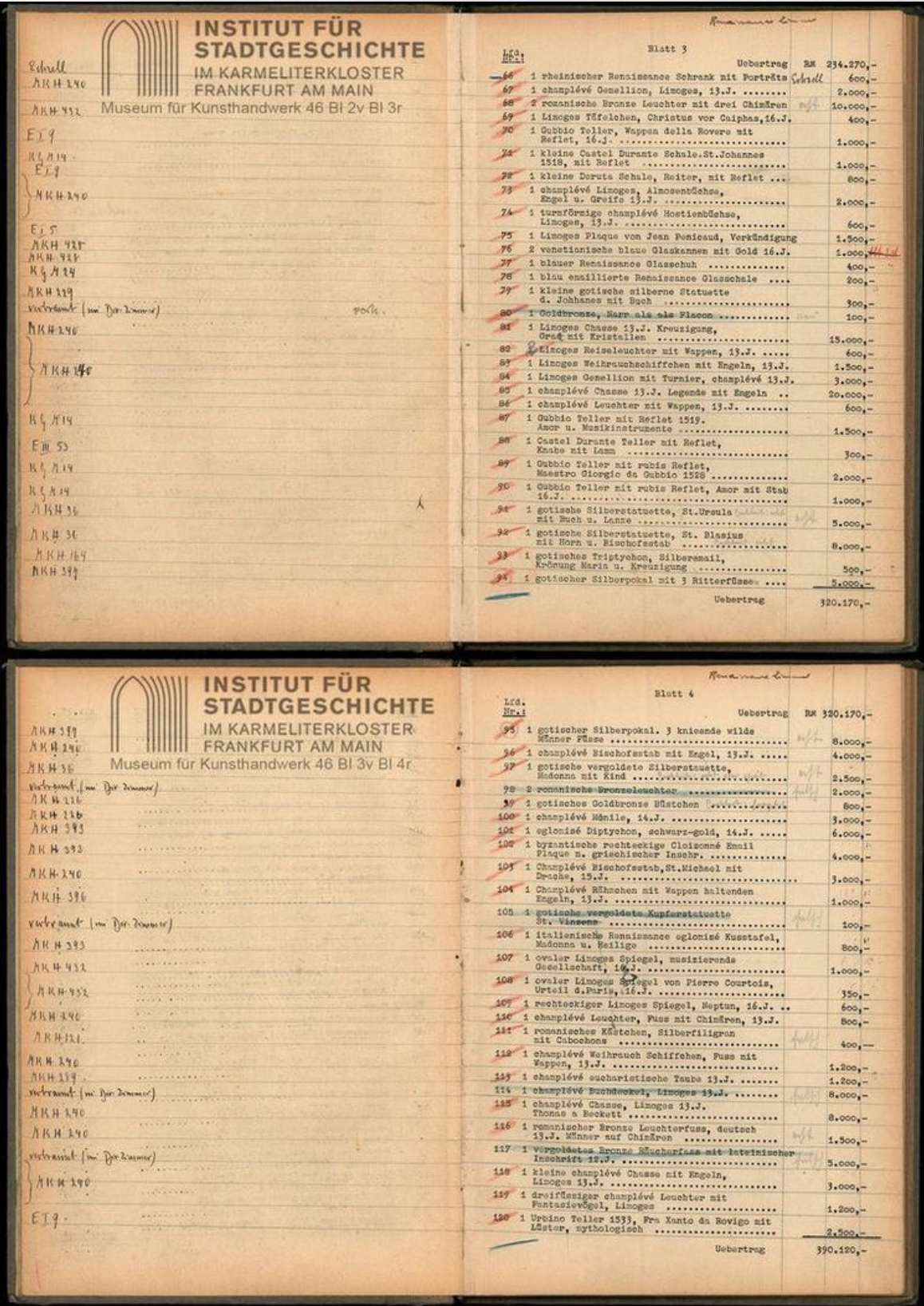
Historical inventories, auction catalogues, dealer records, exhibition publications, correspondence and photographs can help reconstruct the movement of artworks through different collections and periods.
Yet the existence of a document is only the beginning of the inquiry. Researchers must consider who created it, when it was produced, why it was written and whether its description corresponds to the object being examined.
An old catalogue may reproduce an earlier attribution without testing it. A sales invoice may establish that a transaction occurred while revealing little about preceding ownership. A photograph may provide strong evidence of an object’s presence in a collection, provided that its identity can be established.
Dates, dimensions, inscriptions, collection marks and distinguishing physical characteristics can all become important when different sources are compared.
Art provenance research is most persuasive when independent records reinforce one another and inconsistencies are examined rather than concealed.
The particular history of rare musical instruments
Historical violins, violas, cellos and bows are objects of craftsmanship, but also instruments that have lived through performance, restoration and changing musical traditions.
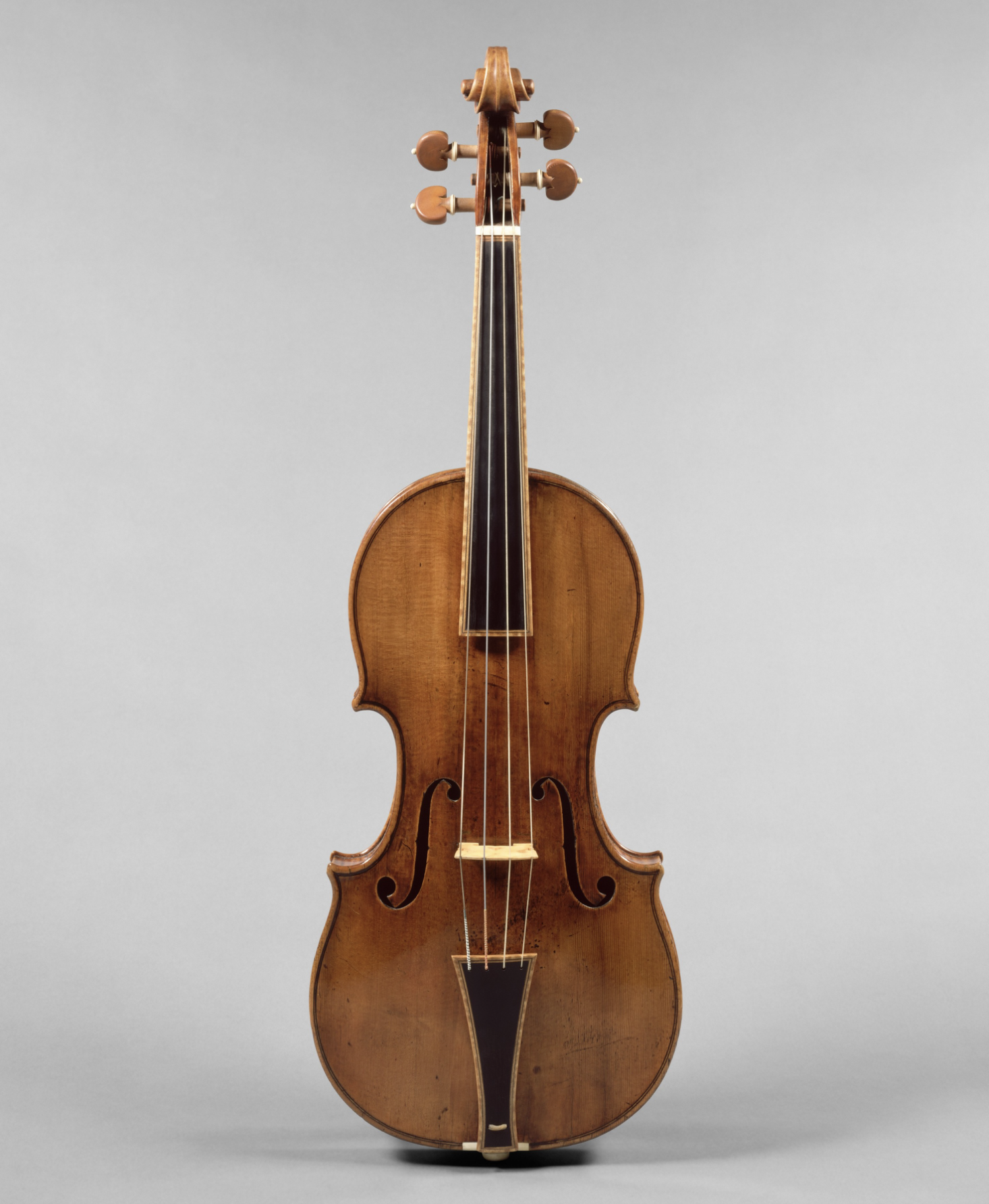
Unlike a painting, a violin is designed to be handled, adjusted and played. Over centuries, instruments may undergo changes to their necks, fittings, internal components or varnish.
These interventions can form an important part of their material history.
The Metropolitan Museum of Art’s “Gould” Stradivari, made in Cremona in 1693, provides a particularly revealing example.
In 1975, the instrument was reconfigured to reflect Baroque-period construction and performance practices. Its museum documentation records these changes, illustrating how an instrument’s present condition must be understood in relation to its historical development.
The Italian violin-making traditions associated with Cremona, Venice, Turin, Naples and other centres have produced generations of specialist research.
Instruments associated with Antonio Stradivari, the Amati family, the Guarneri family and Giovanni Battista Guadagnini require close attention to construction, workmanship, documentary history and specialist opinion.
Certificates can form an important part of that history, but their author, date, wording and scope must be understood carefully.
A historical label bearing a celebrated maker’s name is not, by itself, proof of authorship.
Earlier certificates, archival photographs, measurements, auction records and identifying features may help establish continuity of identity across generations.
For an important instrument, historical documentation and current specialist examination should inform one another.
When scientific analysis enters the conversation
Scientific investigation can reveal aspects of an artwork that remain invisible during ordinary examination.
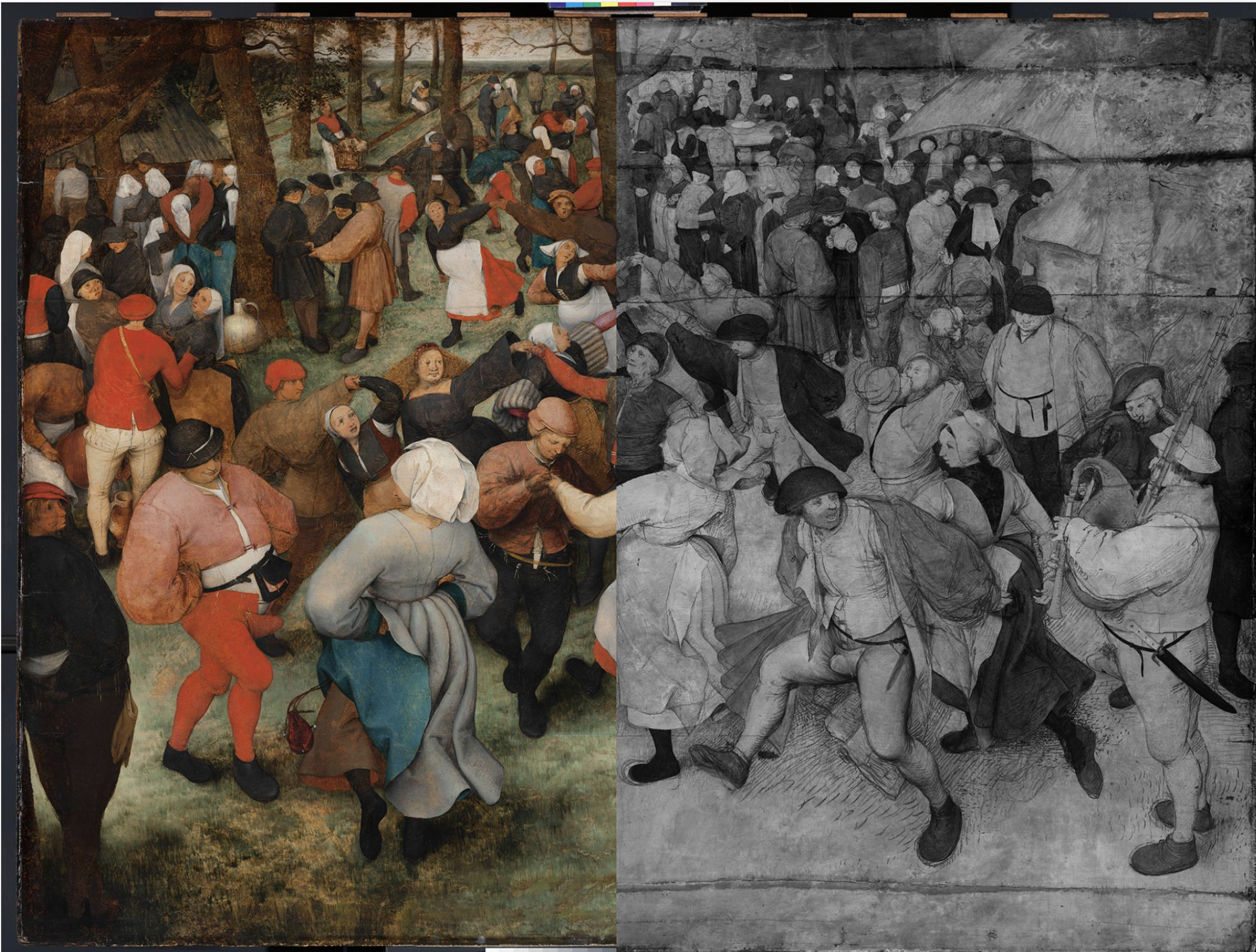
Infrared imaging, X-radiography, microscopy, pigment analysis and other technical methods can help researchers understand the materials and construction of historical paintings.
These examinations may reveal underdrawings, changes made during the creative process, earlier interventions or material characteristics relevant to dating and attribution.
Technical studies of paintings such as Pieter Bruegel the Elder’s The Wedding Dance demonstrate how the visible image can be considered alongside information obtained through scientific examination.
Comparable principles apply to the study of musical instruments, although the methods and questions differ.
Dendrochronology, for example, can contribute chronological evidence about the wood used in an instrument. It does not, on its own, identify the maker.
Likewise, historically compatible pigments or materials cannot independently establish the authorship of a painting.
Scientific findings are most meaningful when interpreted alongside archival evidence, material examination and informed specialist judgment.
The purpose of technical investigation is not to replace scholarship with a single result. It is to test conclusions and refine the questions that researchers ask.
Provenance, title and due diligence
Even when an object’s identity is well supported, a collector must consider whether a proposed transaction raises legal or ethical questions.
Authenticity and lawful ownership are separate matters. Historical research may need to address theft, disputed inheritances, wartime losses, coercive transfers or other events affecting title.
International transactions can introduce additional considerations involving cultural property legislation, export restrictions, customs requirements and protected materials.
The appropriate scope of due diligence depends on the object, its history, the jurisdictions involved and the circumstances of the transaction.
These questions may require independent legal advice alongside specialist art-historical or technical examination.
A responsible acquisition is not defined only by the importance of the object, but by the care taken to understand it.
Confidentiality should not replace evidence
Private transactions have an established place in the international markets for fine art and rare musical instruments.
Collectors may have legitimate reasons to protect their privacy, including personal, commercial and security considerations.
Confidentiality, however, should not prevent appropriate examination of an object and its documentary history.
Qualified parties and their professional advisors may need access to relevant information under suitable confidentiality arrangements.
The extent and timing of disclosure will depend on the circumstances, but evidence must remain capable of independent evaluation.
Discretion protects legitimate interests. It should never be confused with the absence of scrutiny.
Research continues after acquisition
Provenance is often examined before a purchase, but an object’s documentary history remains important throughout its life in a collection.
New archives become available. Previously unknown documents emerge. Scholarly opinions develop as additional evidence is discovered.
Preserving correspondence, certificates, photographs, conservation records and acquisition documentation helps maintain continuity for future custodians.
For private collectors and families, this responsibility can become especially significant when objects pass between generations.
A collection’s history is not static. It grows with the research and care devoted to it.
Knowledge before conclusions
Doppiecorde’s perspective is informed by longstanding involvement in the world of fine musical instruments and by relationships extending into fine art, private collections and cultural patronage.
Our approach emphasizes historical context, documentary evidence, appropriate specialist expertise and independent verification.
The purpose of private advisory is not to substitute confident assurances for careful examination.
It is to help collectors understand what is known, what remains uncertain and which questions deserve further attention.
Art provenance research is particularly meaningful when an object carries substantial historical, cultural or personal significance.
Beyond the moment of acquisition, the knowledge surrounding an object contributes to the responsibility of preserving it.
Readers interested in further research may consult the Getty Provenance Index , the Metropolitan Museum of Art’s record of the “Gould” Stradivari , and the Detroit Institute of Arts’ research on The Wedding Dance .
These institutional references are provided for research and educational context. They do not imply an affiliation with or endorsement of Doppiecorde.