Private collecting requires more than access to exceptional objects. It calls for knowledge, independent judgment, discretion and a long-term cultural perspective.
Fine art and rare musical instruments occupy distinctive places within the world of collecting. Both can embody extraordinary craftsmanship, historical significance, artistic achievement and personal meaning.
Yet each requires specialist expertise, careful documentation and an understanding of its particular market.
For private collectors, families and institutions, fine art and rare instruments advisory provides a structured approach to identifying, evaluating, acquiring and caring for exceptional cultural assets.
At Doppiecorde, the starting point is not an object offered for sale. It is the collector’s interests, aspirations and long-term vision.
Fine Art and Rare Instruments Advisory: Why Specialist Knowledge Matters
Collecting a painting, sculpture or historic string instrument involves questions that extend beyond visual appeal, rarity or price.
The collector must consider authorship, authenticity, provenance, condition, cultural importance, documentation and the circumstances of an acquisition.
Rare musical instruments introduce additional considerations. An important violin, viola, cello or bow is both a cultural object and, potentially, a working instrument.
Its historical integrity, restoration history, physical condition and acoustic characteristics may all influence its suitability for a particular collector or musician.
Effective fine art and rare instruments advisory brings together provenance research, technical evaluation, market understanding and the collector’s individual objectives.
A private advisor can help coordinate the appropriate expertise while maintaining a coherent perspective on the collection as a whole.
Understanding the Collector Before the Acquisition
An effective advisory relationship begins with listening.
Some collectors seek historically important works. Others are drawn to particular artistic periods, schools of craftsmanship or the cultural legacy of individual makers.
Families may wish to preserve collections across generations. Institutions may focus on research, acquisitions or cultural access. Patrons may be interested in supporting talented musicians through the responsible ownership and use of exceptional instruments.
These objectives influence every stage of the advisory process.
Rather than presenting acquisitions as isolated opportunities, an advisor should consider how each object relates to the collector’s existing holdings, priorities and future intentions.
This personal perspective is one of the defining features of private fine art and rare instruments advisory. It places the collector’s long-term interests ahead of any single transaction.
Provenance, Authenticity and Documentation
Provenance is central to responsible collecting.
For fine art, research may include ownership history, exhibition records, scholarly literature, catalogue references, archival material and relevant market documentation.
For rare musical instruments, the process can involve historical certificates, maker attribution, expert opinions, restoration records, ownership history and examination by recognized specialists.
Documentation must be assessed critically. A certificate or attribution should not automatically replace independent research or physical examination.
The appropriate due diligence depends on the object and the circumstances of the transaction.
An advisor can help identify the relevant questions, organize available information and coordinate additional specialist review when necessary.
Within fine art and rare instruments advisory, this careful evaluation supports informed decisions and responsible stewardship.
Condition, Conservation and Long-Term Care
Condition is another essential consideration.
Works of art may require conservation assessments, environmental controls, specialist transportation or carefully managed storage.
Historic instruments present a different balance between preservation and use. Their condition may be influenced by previous repairs, alterations, materials and the demands of performance.
Collectors should understand not only an object’s present condition but also its long-term care requirements.
A responsible advisory process may therefore involve conservators, restorers, insurers, collection managers and other qualified professionals.
Institutions such as The Metropolitan Museum of Art demonstrate the importance of researching and preserving cultural objects, including historic musical instruments.
Independent Judgment and Transparent Relationships
Trust is fundamental to private advisory.
Collectors should understand the advisor’s role, professional relationships and compensation arrangements before proceeding with an acquisition.
Potential conflicts of interest should be disclosed and addressed appropriately.
Independence of judgment also means recognizing when an acquisition is unsuitable. Sometimes the most valuable advice is to wait, seek additional information or decline an opportunity.
The objective is not to complete every possible transaction. It is to support decisions consistent with the collector’s interests.
Private Transactions and Discreet Sourcing
Important cultural assets do not always appear through public sales.
Some opportunities arise through established professional relationships, private collections, galleries, dealers, specialist networks or direct introductions.
Discretion can be especially important for collectors who value confidentiality concerning their holdings, acquisition strategies or personal circumstances.
However, private sourcing does not reduce the need for diligence.
Ownership, legal title, authenticity, condition, transaction terms and relevant regulatory considerations should be reviewed with appropriate professional support.
Confidentiality and transparency are not opposites: a well-structured private transaction should provide both discretion and clarity to the parties involved.
Carlo Bergonzi — Cremona, 1731
An important example of eighteenth-century Cremonese violin making, this Carlo Bergonzi violin, dated 1731, illustrates the significance of specialist relationships in the international market for exceptional musical instruments.
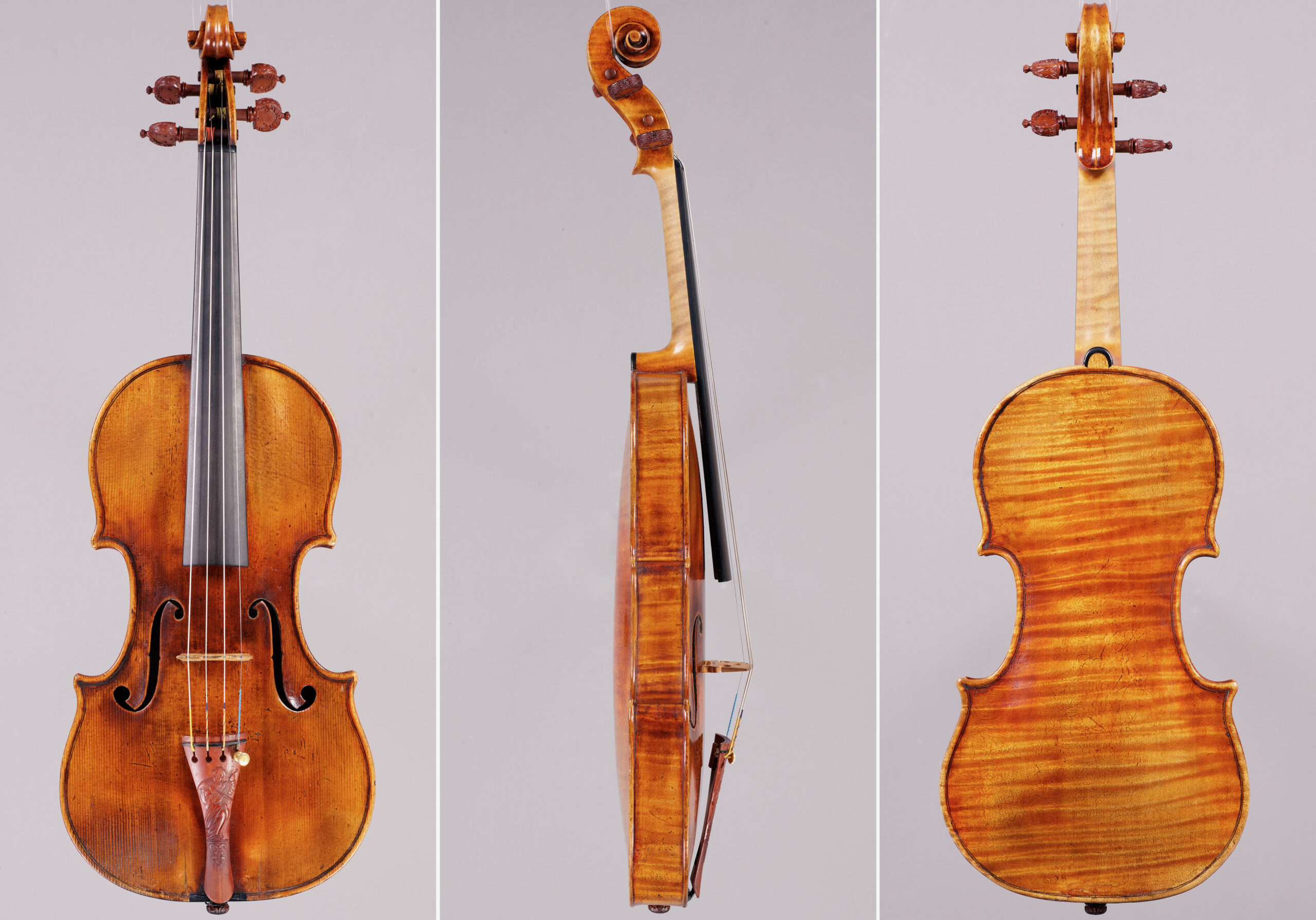
Setaro Fine Instruments & Bows participated in the sale of this instrument, representing the transaction between its longstanding professional partner, J&A Beare, and the final client.
The transaction reflects the importance of established relationships, specialist knowledge and discretion when facilitating the acquisition of historically significant instruments.
For Doppiecorde, this example demonstrates how fine art and rare instruments advisory can connect collectors with exceptional assets through trusted international professional networks.
Such professional relationships can be particularly valuable when a collector seeks an instrument whose historical importance requires careful consideration, specialist documentation and confidential coordination.
Rare Musical Instruments as Cultural Assets
Rare instruments occupy a particularly meaningful position within private collecting.
An exceptional instrument can connect centuries of craftsmanship with contemporary musical life.
For some collectors, its significance lies primarily in historical preservation. For others, the possibility of placing an instrument in the hands of a talented musician forms part of a broader cultural vision.
Such arrangements may require careful consideration of ownership, insurance, maintenance, custody, use and the responsibilities of the parties involved.
When thoughtfully structured, musical patronage can create a connection between private stewardship and public artistic achievement.
Learn more about Doppiecorde’s cultural patronage perspective .
Building a Collection With Continuity and Purpose
A distinguished collection is rarely defined by the number of objects it contains.
Its identity develops through informed choices, consistent standards and an understanding of the relationships between individual works.
Long-term advisory may address collection documentation, conservation, insurance coordination, succession planning, institutional relationships, loans and cultural patronage.
For families and institutions, continuity can be particularly valuable.
A well-documented collection is easier to understand, preserve and responsibly transfer to future generations.
“Exceptional objects deserve more than ownership. They deserve understanding, stewardship and purpose.”
The Doppiecorde Approach
Doppiecorde is a private cultural and art advisory connecting people, institutions and exceptional assets.
Its perspective reflects the relationship between fine art, rare musical instruments, private collections and cultural patronage.
Doppiecorde’s approach to fine art and rare instruments advisory combines cultural knowledge, specialist relationships and a commitment to responsible private collecting.
Rather than separating cultural significance from practical considerations, Doppiecorde approaches each collection through knowledge, trusted relationships and long-term thinking.
The purpose of advisory is not simply to facilitate acquisitions. It is to help collectors make informed decisions about objects whose importance may extend far beyond their immediate ownership.
Explore Exceptional Assets and Private Art Advisory.
Fine Art & Rare Instruments Advisory — FAQ
What is fine art and rare instruments advisory?
It is a specialist advisory service supporting collectors with research, sourcing, due diligence, acquisitions and the long-term stewardship of works of art and historic musical instruments.
Why do rare musical instruments require specialist expertise?
Historic instruments may require examination of maker attribution, provenance, certificates, condition, restoration history and, where relevant, acoustic characteristics. Independent specialists can play an essential role.
Can an art advisor assist with private acquisitions?
Yes. Depending on the assignment, an advisor may help identify opportunities, coordinate specialist evaluations, review documentation and support negotiations alongside appropriate legal and other professional advisors.
Can rare instruments form part of a cultural patronage program?
Yes. Some collectors support musicians by making privately owned instruments available for artistic use under carefully structured arrangements addressing custody, insurance, maintenance and other responsibilities.
Does Doppiecorde advise only on fine art?
Doppiecorde’s cultural advisory perspective extends across fine art, rare musical instruments, exceptional assets and cultural patronage, according to the nature of the engagement.
Begin a Conversation
Every collection begins with a particular vision. Doppiecorde welcomes thoughtful conversations with private collectors, families and institutions seeking a long-term cultural perspective.
Contact Doppiecorde →